
When the overwhelm of everyday life catches up, the question that usually comes to mind is, “How do I even choose the right therapist for myself?” Often, it feels like a stress in itself, but trust me, it doesn’t have to be. Whether this is your first time searching for a therapist online or you are restarting therapy after a long break, this practical guide helps you understand how to choose the right therapist step-by-step.
Understanding the therapist-matching process and filtering out the best online therapist is the first step one can take towards their mental well-being, and that is where this guide comes in. We will explore some situational examples to understand why online therapy can work well for you, if it’s the right fit and how you can create a simple checklist to move from searching to healing with the right therapist.

Why does choosing the right therapist matter?
Many face one common problem with therapy: the trial-and-error burnout of choosing the right therapist. Now, what is the trial-and-error burnout?
Therapy works best when you and your therapist are a good match, working towards a common goal – your personal growth and well-being. However, when your search leads you to too many options online, overwhelm hits you on top of all that you are already feeling – burnout, anxiety, or stress. You’re already navigating emotional distress, and now you need to evaluate credentials, different approaches, and whether the therapist you found is a ‘good fit’ or not. This leads to trial-and-error burnout. You take a step towards your mental wellness and start therapy, realise the therapist is not really the right fit for you and might not even be working towards the shared goal of your emotional well-being, and then you stop and begin the search all over again.
Not every therapist you come across will be the right match. When there is no alignment in the communication style you share, their therapeutic approach, or most importantly, your goal, it can result in a discouraging experience of therapy. That is why understanding how to choose a therapist helps you avoid this trial-and-error burnout, helping you start your wellness journey sooner.

Start with your needs – “What am I looking for?”
Reflecting on a few things with yourself before truly beginning the therapist matching process is essential. Here are a few honest questions you need to ask yourself:
- What do I want to work on? (stress, anxiety, emotional burnout, relationship issues, grief, parental issues, loneliness)
- What dynamics serve my growth better? Is it in-person therapy, or would I rather go to a licensed therapist online?
- Am I looking at short-term, solution-focused therapy or a long-term commitment for consistent personal growth?
- What practical constraints do I have? (budget, schedule, language, area or cultural background of the therapist)
Let’s look at a situational example to understand why answering all these for yourself before you begin your search helps.
Sia, a full-time nurse with unpredictable shifts and timings, is experiencing burnout and has no work-life balance, which has resulted in fights at home and extreme anxiety. She has decided to see a counselling psychologist and is trying to find the right therapist for herself. Here are a few things she listed to filter out who might work for her:
- I need evening appointments, the only time I can manage out of work during the weekend.
- I need the best online therapist since it’s flexible for me and saves me the time that would go into travelling.
- I need someone who knows the constraints of Indian households and has some understanding of my cultural background.
- I don’t think I can spend more than ₹1500 per session, given my salary.
- I need someone who can help me manage my anxiety and burnout.
Listing these narrowed down her search to finding the best online therapist options for anxiety management that fit her evening schedule, provide online therapy on a budget and are Indian.

The therapist matching process to choose the right therapist: a step-by-step guide.
Note that not every therapist has the same training. When you are deciding how to choose a therapist, check their credentials, approaches and specialisations. Here’s a step-by-step therapist matching process to follow:
Create a short list – After you have listed down the answers to the above shared questions, start by creating a short list of options for both local and licensed therapists online that match your needs. You can use referrals, clinic websites, or online therapy platforms.
Scan their profiles – From the list, start scanning the profiles for specialisations, years of experience, therapeutic approach used and other logistics like fees per session, cancellation policy, consent and confidentiality maintained.
Check the reviews and referrals – If you found an online therapist or a local therapist through referrals, then understand the complete profile and therapeutic approach from the one who referred; for those you listed yourself, look for patient reviews, available social media profiles or pages that can help, but weigh them lightly as the experience of each individual differs.
Have a screening/introductory call – If it’s your first time going to therapy, my suggestion would be to find a therapist offering a 10-15 minute screening/introductory call to consult. Many therapists these days offer that at no extra cost, so use it to understand if they feel like the right fit for you, ask about the questions you have in mind on how it works, session structure, cancellation process, what a typical session can look like and provide an understanding of your issue or what exactly is it that you are looking for.
Begin with one session first – Choosing to have one session first helps you understand the approach and communication style of the therapist and gives the therapist an understanding of the issues you would like to discuss. This helps with not having to commit long-term and see if the therapist feels like the right fit for you.
Trust the first few sessions – The relationship you build with your therapist takes time and improves as you settle in and start feeling comfortable with them. If, after 3-4 sessions, the space created by the therapist still feels mismatched or misaligned to you, it’s completely okay to switch, but it’s important to trust the process for the first few sessions to truly understand if it’s working out for you.
Moving through with this process helps you understand your needs and to make real, steady progress
“What can I ask in that first conversation?”
As mentioned above, many therapists or wellness companies offer a 10-15 minute free consultation, called a screening or introductory call. It is usually conducted by a first responder, a member of the client intake team (not always the therapist directly), to understand the concerns you wish to address. They help you in understanding the therapist’s approach and see who feels like the right therapist fit for you. It is important to use this time to ask them about the therapeutic approach used, the experience the therapist might have had with your concerns, the availability of the therapist you are looking for and other therapeutic dynamics.
Here are a few things you can ask:
- “Have you worked with people who have a similar concern as mine?”
- “What approach is used by the therapist?”
- “Is the therapist available ( on days and time) for online/offline therapy?”
- “What is the usual structure followed by the therapist during a session?”
- “How many sessions do I need to make progress emotionally?”
- “What are the credentials of the therapist? What’s the difference between a psychologist and a psychiatrist?”
- “Do you maintain confidentiality or do you share information shared in sessions with someone?”
- “What is the cancellation policy? What does the payment structure look like?”
Asking these questions can help you understand how the therapist or the wellness company handles intake and if they are working legally and have clarity regarding confidentiality to create a safe space for their clients.
Note that it is essential to look for both red and green flags before confirming.
Green flags (good signs) – Sharing a transparent fee structure, providing active listening during the consultation, having clear boundaries by not providing therapeutic advice on screening calls, sharing a detailed informed consent, and providing correct credentials of the therapist (not exaggerating the therapist’s licensure).
Red flags (warning signs) – Not clarifying around confidentiality, dismissive responses, pressurising to directly take therapy first, promising to ‘fix you’ in the first session, refusing to answer basic questions about credentials, or unlicensed claims.
Looking for these signs early on can help you make the right choice and avoid being exhausted by the trial-and-error cycle.
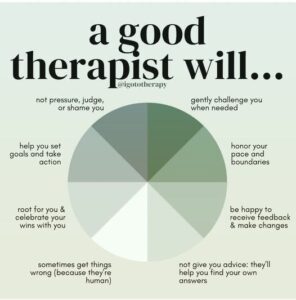
Quick Checklist: Choosing the Right Therapist (screenshot it to tick the boxes you need):
- I reflected on the things I need and clarified my own goals for therapy.
- I verified if the therapist’s claims are accurate.
- I confirmed the therapeutic approach used and the experience they have with my concern.
- I felt heard during the screening call and did not feel pressured to commit to them.
- I understood the payment structure, cancellation policy, and the session structure clearly.
- I felt like my information would be secured and would not be shared with anyone.
Let’s look at another situational example to understand how ticking all the boxes before committing to a therapist can help you begin a healthy therapeutic journey:
Raghav, a 21-year old college student, has started feeling isolated by his friends. He’s living away from his family due to college, and this feeling of isolation has added to his loneliness and anxiety. He talked to his sister, and she suggested that he look for a good therapist.
Raghav reached out to 2 mental wellness companies for a free consultation. The first call discouraged him as it could not provide him with enough clarity about the therapeutic process, and he felt forced to commit immediately. Then he made a checklist of the things he needed to be sure of after the screening call to move forward with booking a session. Before his other scheduled screening call, he understood all that he needed to ask and felt a little relieved; he was more open to asking clear questions and found it quite helpful. The experience he had with the other company helped him tick all the required boxes and look for both green and red flags, which helped him make a confident choice about choosing the right online therapist.
Learning how to choose a therapist for yourself is truly important. With the help of this therapist-matching process and the checklist, you can prioritise your safety and understand that the right therapist will not solve everything overnight, but will help you understand your needs better by actively working towards the shared goal of your therapeutic journey.
If you’re ready to begin, Feliza Mental Wellness can help you understand this journey better. Get matched with the right therapist by booking a 15-minute free consultation call with us at myfeliza.com or by simply calling us directly at +91 7888-558-974.